Why Term Length Matters
The term of a loan is the length of time you have to repay it. For mortgages, the most common terms are 15 and 30 years, but other options exist. The term you choose directly influences your monthly payment, total interest paid, and how quickly you build equity. Understanding these trade-offs helps you match the loan to your financial goals and cash flow.
A longer term (like 30 years) spreads payments over more months, lowering the monthly payment but increasing total interest. A shorter term (like 15 years) requires higher monthly payments but reduces total interest and builds equity faster. There is no universal 'best' term—the right choice depends on your income, savings, and long-term plans.
- Longer terms: lower monthly payments, more total interest, slower equity growth.
- Shorter terms: higher monthly payments, less total interest, faster equity growth.
- The amortization schedule shows the exact split between principal and interest in each payment.
Monthly Payment Comparison
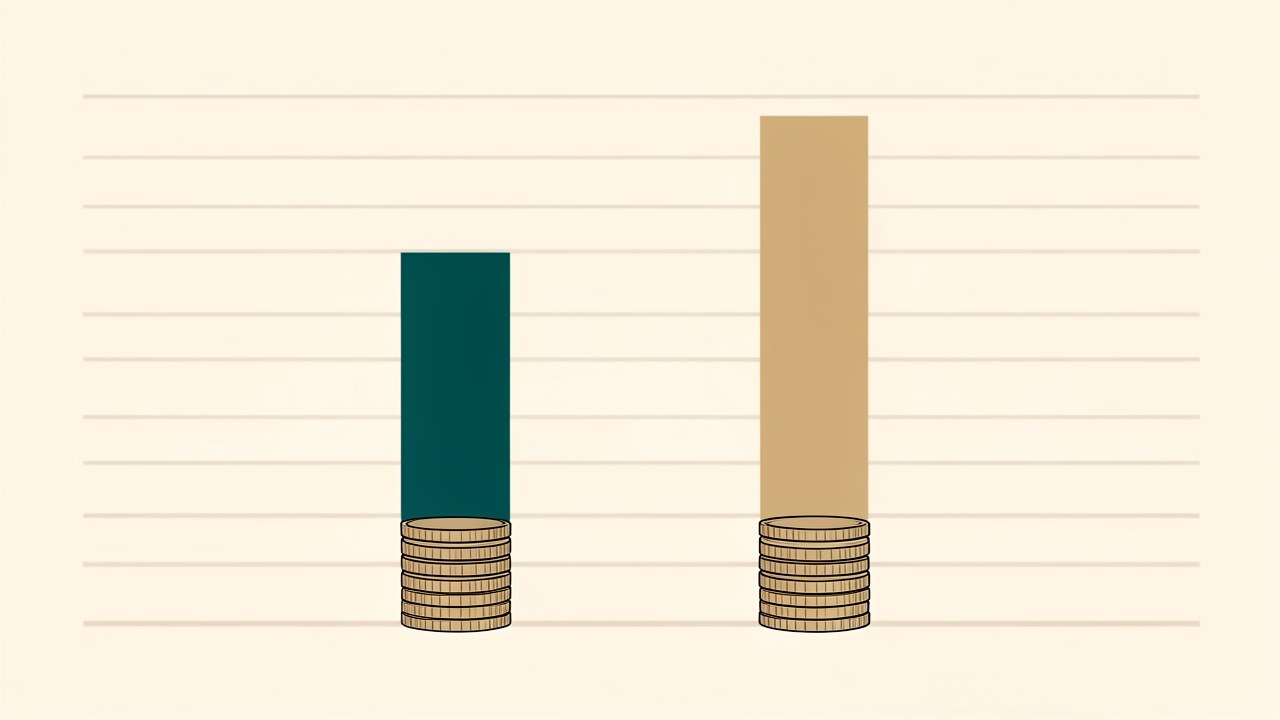
For the same loan amount and interest rate, a 15-year term will always have a higher monthly payment than a 30-year term because the principal is repaid over half the time. For example, on a $300,000 loan at a fixed interest rate of 6%, the monthly payment (principal and interest) for a 30-year term would be approximately $1,799, while a 15-year term would require about $2,532. That is a difference of roughly $733 per month.
- Use a loan amortization calculator to compare exact monthly payments for different terms.
- Monthly payment includes both principal and interest; taxes and insurance are separate.
- A higher monthly payment can strain cash flow but may be offset by interest savings.
Total Interest Comparison
Shorter loan terms typically result in substantially lower total interest costs. Using the same example—$300,000 at 6%—the total interest paid over 30 years would be about $347,515, while over 15 years it would be about $155,682. That is a savings of over $190,000 in interest, even though the monthly payment is higher.
- Total interest depends on the loan amount, interest rate, and term length.
- Shorter terms reduce the number of interest accrual periods, saving money.
- Comparing total interest across terms helps you weigh monthly savings against long-term cost.
Amortization Pace Comparison
Amortization pace refers to how quickly you reduce the principal balance over time. In the early years of a 30-year loan, a large portion of each payment goes toward interest, and the principal drops slowly. In contrast, a 15-year loan has a much steeper amortization curve: you build equity faster, and the balance declines more rapidly from the start. This can be an important factor if you plan to sell the home or refinance before the loan ends.
- Review an amortization schedule to see the principal/interest split for each payment.
- Shorter terms are more 'principal-heavy' from the beginning.
- Faster equity build-up can provide financial flexibility.
- If you keep the loan for the full term, a shorter term results in a mortgage-free date sooner.
When a Shorter Term Makes Sense
A shorter loan term (like 15 years) is often a good fit if you have stable income, comfortable cash flow, and can afford the higher monthly payment without sacrificing other financial goals. It can also be beneficial if you are close to retirement and want to eliminate mortgage debt before then, or if you want to minimize total interest paid over the life of the loan.
However, a longer term may be more appropriate if you prefer lower monthly payments to free up cash for other investments, emergencies, or life expenses. Choosing a longer term does not lock you in—you can always make extra principal payments to shorten the effective term, though you should check whether your lender imposes prepayment penalties.
- A shorter term works well when monthly cash flow is not a constraint.
- A longer term offers more monthly flexibility, but total interest is higher.
- Extra principal payments can mimic a shorter term without the higher required payment.
- Consider how long you plan to stay in the home—if you may refinance or move soon, the interest savings may not materialize.
How to Use These Comparisons
To make an informed decision, start by calculating the monthly payment and total interest for the loan amounts and terms you are considering. Use an amortization calculator or spreadsheet to see side-by-side numbers. Then, consider your budget, financial goals, and how long you expect to keep the loan. Remember that these comparisons assume the same interest rate; in practice, shorter-term loans often come with lower rates, which can increase the savings further.
- Input the same loan amount and rate to isolate the effect of term.
- Compare monthly payment, total interest, and amortization pace across terms.
- Factor in your own income stability, savings, and retirement timeline.
- Be aware that prepayment penalties may affect the ability to pay off the loan early.
decision-criteria matrix
The table below summarizes how loan term affects key metrics for a hypothetical $300,000 loan at a fixed 6% interest rate. This is for illustrative purposes; your actual numbers will vary with rate and amount.
- Choose a shorter term if you can handle the higher monthly payment and want to save on interest.
- Choose a longer term if you need lower monthly payments and can invest the difference.
- Compare your personal loan amounts and rates using an amortization calculator before deciding.
- Consider your job stability, current debts, and retirement plans.
| Feature | 15-Year Term | 30-Year Term |
|---|---|---|
| Monthly Payment (P&I) | ≈ $2,532 | ≈ $1,799 |
| Total Interest Paid | ≈ $155,682 | ≈ $347,515 |
| Time to Pay Off | 15 years | 30 years |
| Equity Build Speed | Fast | Slow |
| Monthly Cash Flow | Higher | Lower |
| Total Interest Cost | Lower | Higher |
Frequently asked questions
How do prepayment penalties interact with term choices?
Some lenders impose prepayment penalties if you pay off the loan early, which could reduce the benefit of a shorter term or making extra payments. When comparing terms, always check your loan agreement or ask the lender about any penalties. A short term may come with a lower interest rate but could also have prepayment restrictions. If you think you might pay off the loan early, factor those penalties into your cost comparison.
What happens if I refinance from a 30-year to a 15-year term?
Refinancing from a 30-year to a 15-year term typically means you'll have a higher monthly payment, but you'll pay off the loan faster and may get a lower interest rate. Your amortization schedule will reset, meaning the balance will be repaid according to the new term. You'll also pay closing costs, so weigh those fees against the potential interest savings. Use a refinance calculator to compare your current loan with a new 15-year term.
How does loan term affect the amortization curve shape?
The amortization curve for a shorter term is much steeper: you pay down principal more quickly, and the interest portion of each payment decreases faster. In a 30-year loan, the curve is flatter, with a higher proportion of interest early on and slow principal reduction. You can see this by comparing the amortization schedules side by side.
How can I compare different loan terms?
To compare different loan terms, use a loan amortization calculator that lets you input the loan amount, interest rate, and term. Generate the monthly payment and total interest for each term. Look at the amortization schedule to see how the balance decreases over time. Compare the monthly payments, total interest costs, and how quickly you build equity.
Are there any downsides to a shorter term?
The main downside is the higher monthly payment, which can strain your budget and reduce your liquidity. You may have less money available for emergencies, other investments, or large expenses. Also, if you plan to move or refinance soon, you might not recoup the interest savings, and some lenders may have prepayment penalties. Ensure the payment fits comfortably within your financial plan.